WELLS FARGO
Wells Fargo Museum

Designing a museum from the story out
storytelling Strategy
Experience design
interactive experiences
production management
content curation
executive summary
Wells Fargo's museum experience had leaned on heritage and history; it told visitors the brand was old, not why it mattered now. We rebuilt the approach from the communication goals up — defining what the museum needed visitors to believe, developing an overarching narrative of Wells Fargo as a catalyst for progress, curating the stories that carried that narrative through a content filter, designing the experiences that brought those stories to life, and only then designing the museum around them. We also assembled and ran the team that built it — the fabricators, programmers, and graphics partners whose work turned the concept into an operating space. The museum opened as a flagship for the brand, with a public grand opening keyed to the city it was built for.
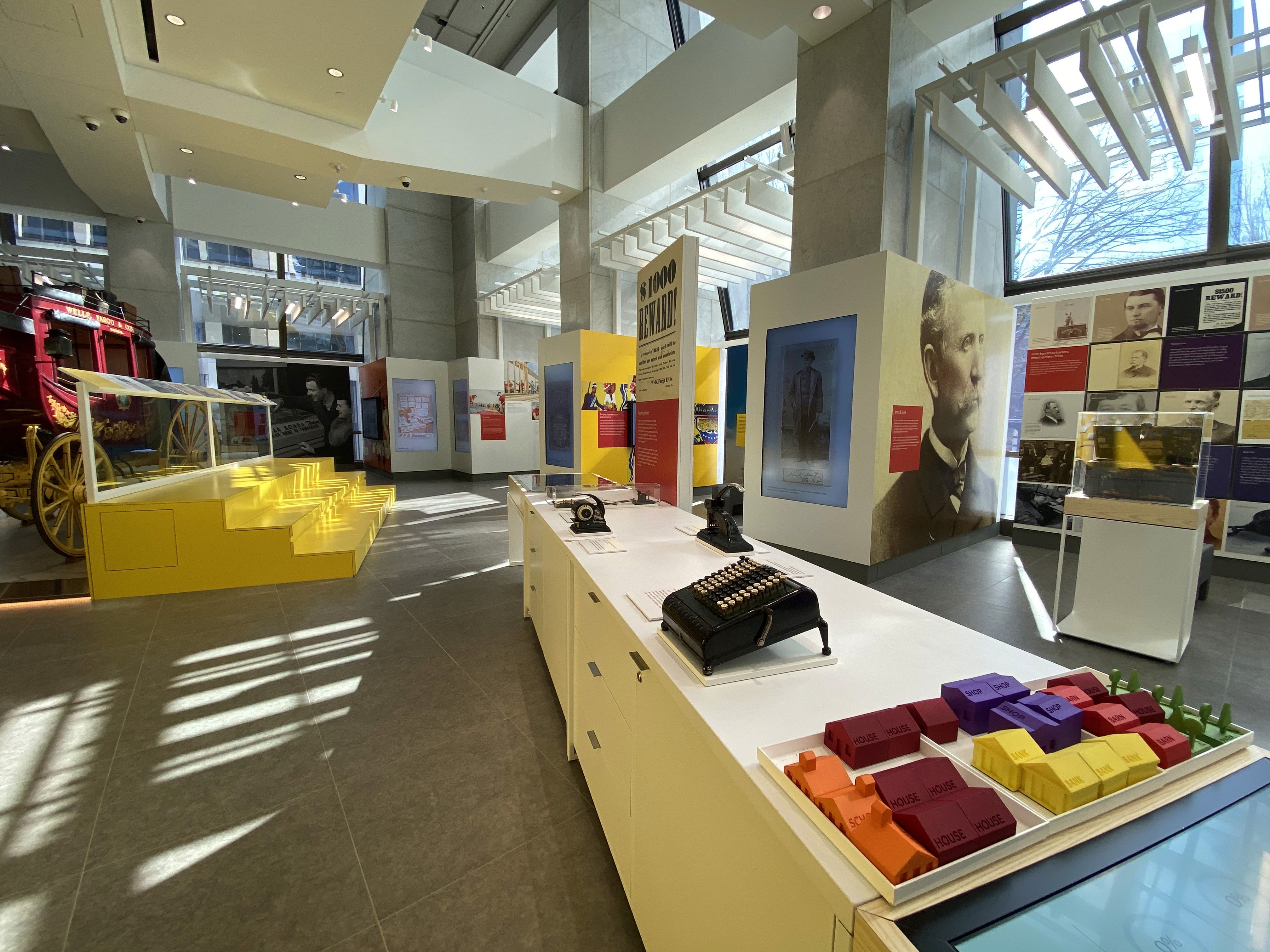
A history problem that was really a story problem
The old museum was reverent and handsome, and it left visitors with a single impression: Wells Fargo had been around a long time. What it never answered was why that history should matter to the person standing in the room. For Portland, the brand wanted a different result — a museum that felt local, relevant, and alive. That reframing turned a design assignment into a storytelling one.
Starting with what the brand needed to say
We began with the communication goals. Before any exhibit existed, we defined what visitors should walk out believing — that Wells Fargo is woven into the communities it serves, that its history includes socially progressive innovation, and that it continues to shape both banking and the places people live. From those goals came the narrative: Wells Fargo as a catalyst for progress, told across yesterday, today, and tomorrow. That idea reframed even the museum's icon — the stagecoach became a story of innovation that moved money and built the West, not a relic of transportation.
The stagecoach is a story of innovation rather than one of transportation.

A filter that decided what belonged
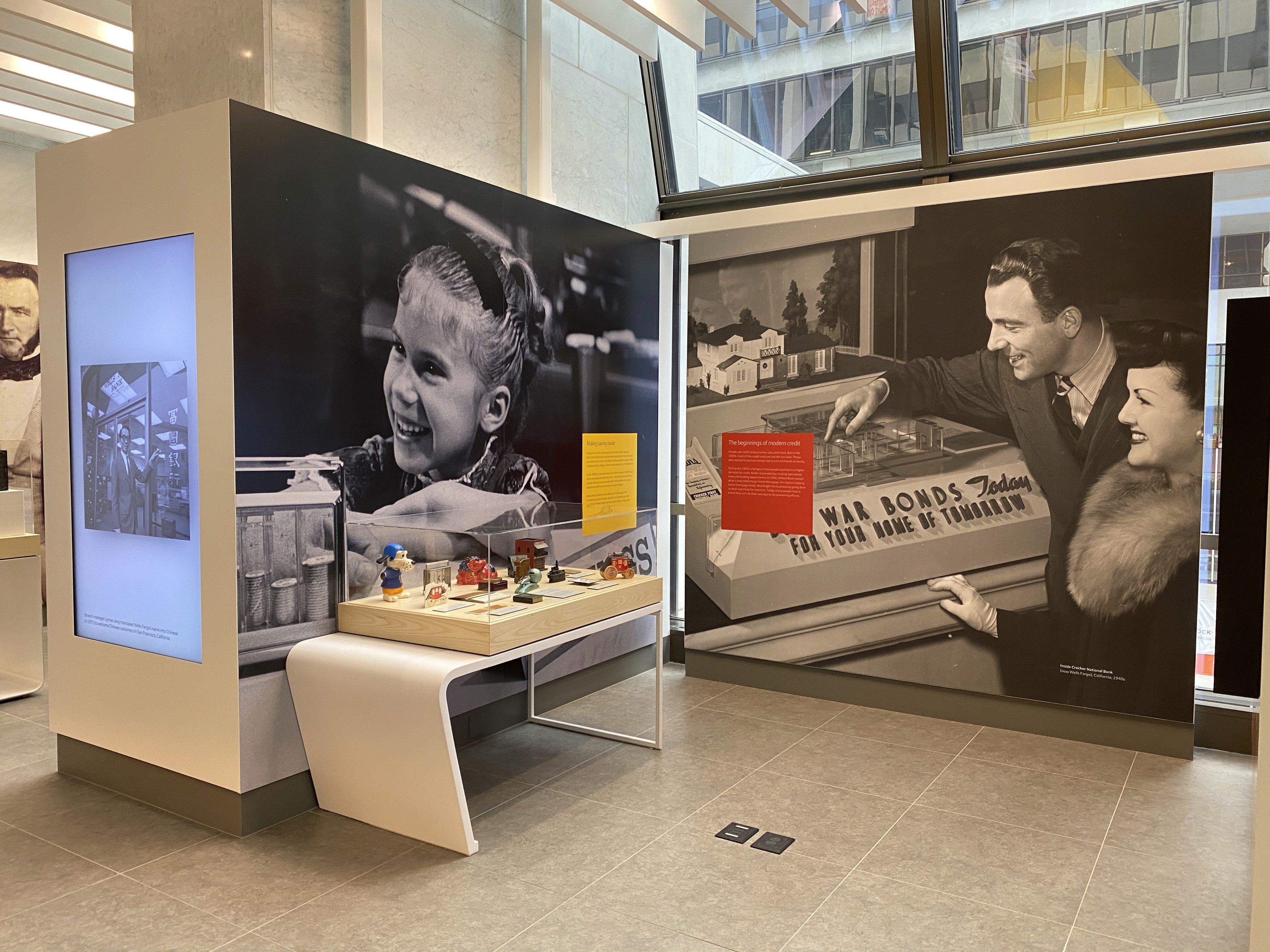
A narrative is only as strong as what you keep out. We built a content filter — criteria every story and artifact had to pass before earning a place: Was it a real innovation? Did customers benefit? Was it local, relevant, and human? Did Wells Fargo genuinely play a role? We ran the content through a workshop against that filter, modifying some stories, cutting others, and gathering new ones from Portland's own banking leaders. The stories that remained were organized across three altitudes — universal themes, local Portland stories, and personal ones — so the experience worked for residents and visitors alike.
The content, and the experiences built to carry it
Only once the stories were set did we design the experiences to tell them — and only then did we shape the museum around those experiences. The result was a room where nearly every surface did a job.
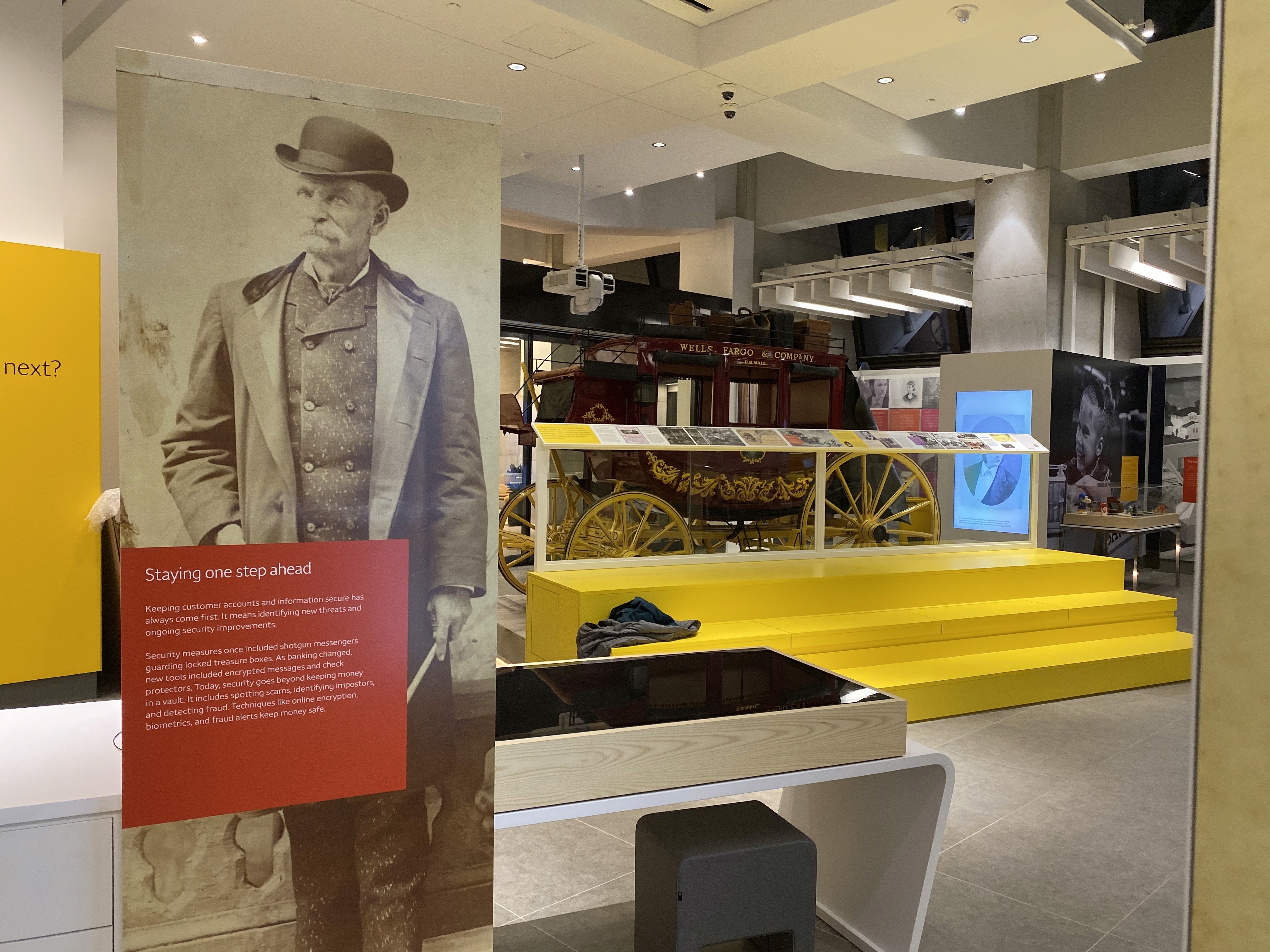
The stagecoach anchored it, set on a historic map of the West and paired with an augmented-reality viewer — a transparent touchscreen through which visitors could see the driver, the passengers, and the horses brought to life, turning a static artifact into the story of how Wells Fargo moved money and connected communities. Nearby, the Gold Rush came alive through the same lens: an augmented-reality experience set in the era when Wells Fargo's Portland assay office weighed gold dust and a network of express routes carried value across a still-forming region.
The local stories carried much of the museum, because they were the ones a Portlander would recognize. We told how access to credit built real businesses — the loans behind Blue Star Donuts and Columbia Sportswear — and how Wells Fargo financed the Lime wind farm, a community-scale renewable-energy project that took years to get off the ground. We covered the bank's role serving the Chinese-owned businesses of early Oregon when others would not, and traced how home loans, mortgages, and commercial lending are the quiet machinery by which neighborhoods get built.
A changemakers wall — the People of Wells Fargo — ran about ten feet tall, filled with portraits that put human faces to a history usually told in dates and artifacts: founders, barrier-breakers, and the everyday people whose first loan or first account changed the course of a life. Universal stories carried the broader ideas. A security exhibit ran from Black Bart and the origins of forensic investigation to a working facial-recognition demo that showed visitors how the technology maps and matches a face — a direct line from a nineteenth-century signature to modern biometric banking. And innovation ran throughout, including the story of how, in the early 1970s, a Wells Fargo line of credit financed production of Atari's first products — the credit behind Pong, the game that started the video-game industry.
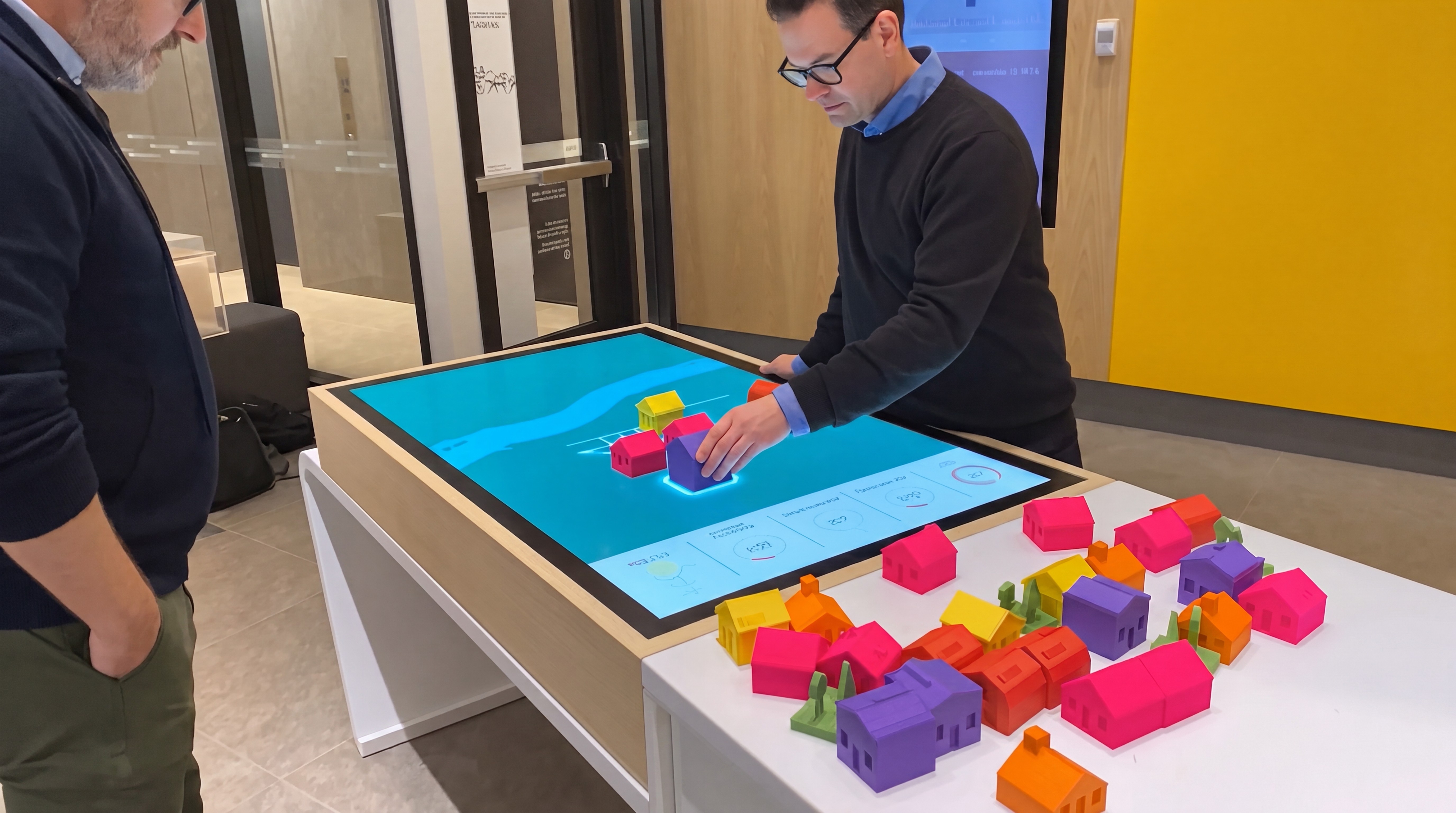
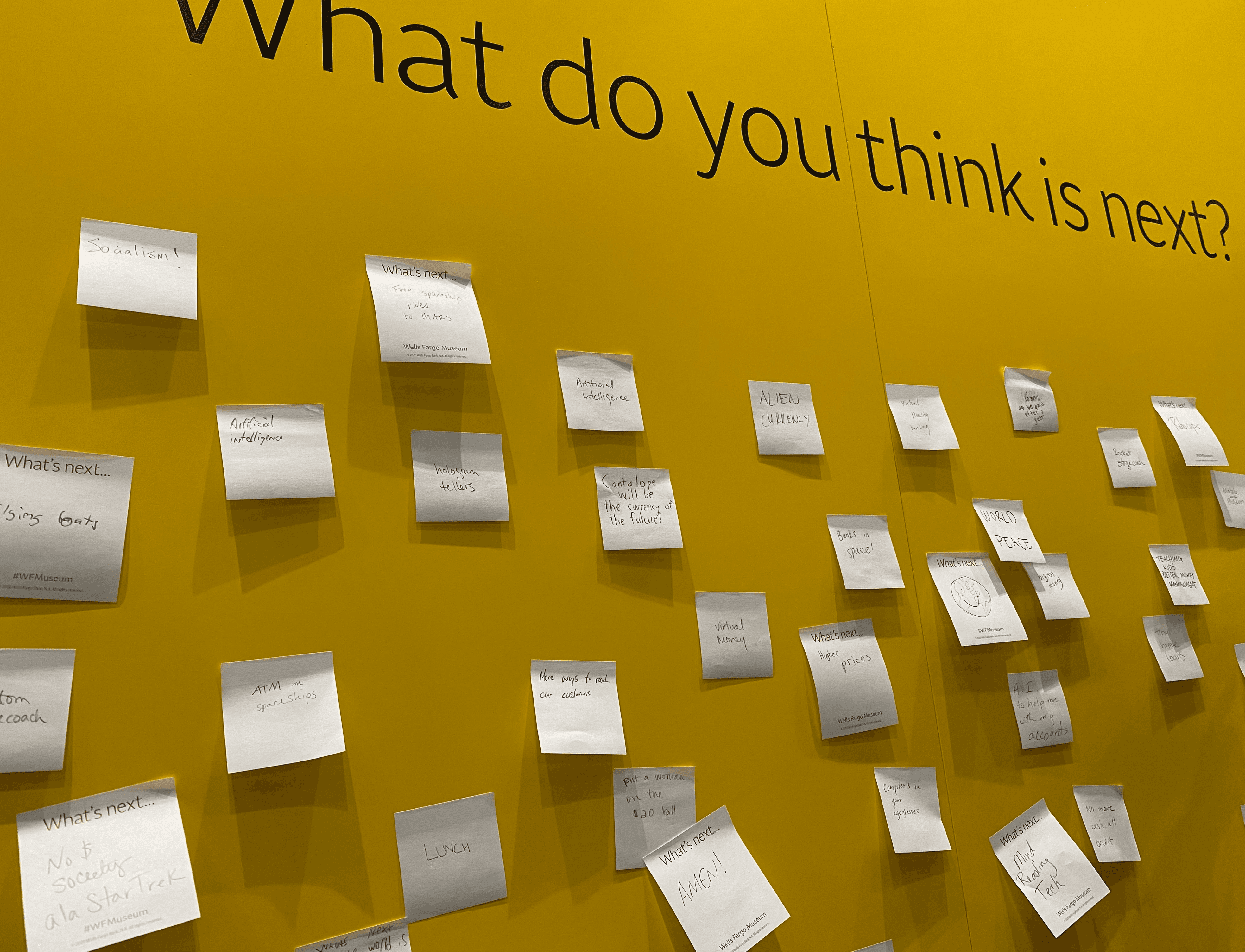
At the center of the room sat How Communities Are Built, an interactive game that fused a physical tabletop with a digital layer — Minecraft meets Monopoly. Alone or in groups, visitors placed building blocks and answered questions about commerce, housing, infrastructure, security, and credit, watching their community develop as they made it more complete — and seeing where a bank fits within a working place. A Future Wall closed the experience by turning the narrative back on the visitor, with one open question: what do you think is next?
Finding the team that could build it
A concept is only worth as much as the execution behind it, and the client needed a partner who could make it real. We assembled and managed that team. We took the program to bid and brought in the right specialists — the fabricator and installer who built the exhibits, the programmers behind every interactive and augmented-reality piece, and the signage and environmental-graphics vendor — then coordinated their work alongside the architect of record and general contractor the client had engaged for the base build-out. Our role was to keep the effort faithful to the idea: find capable partners, hold the standard, and carry the catalyst-for-progress narrative from the first communication goal through to the last installed exhibit.
What this proved
The Portland Museum reflects a conviction that runs through our work: an environment is the product of the thinking done before it. Goals, then narrative, then stories, then experiences, then the room — in that order. It was designed to scale and adapt to other locations, because the deliverable was never a single museum. It was a repeatable way to turn what a brand believes into a place people can walk through.
Next Project
