JOHNSON & JOHNSON
A Retail Lab
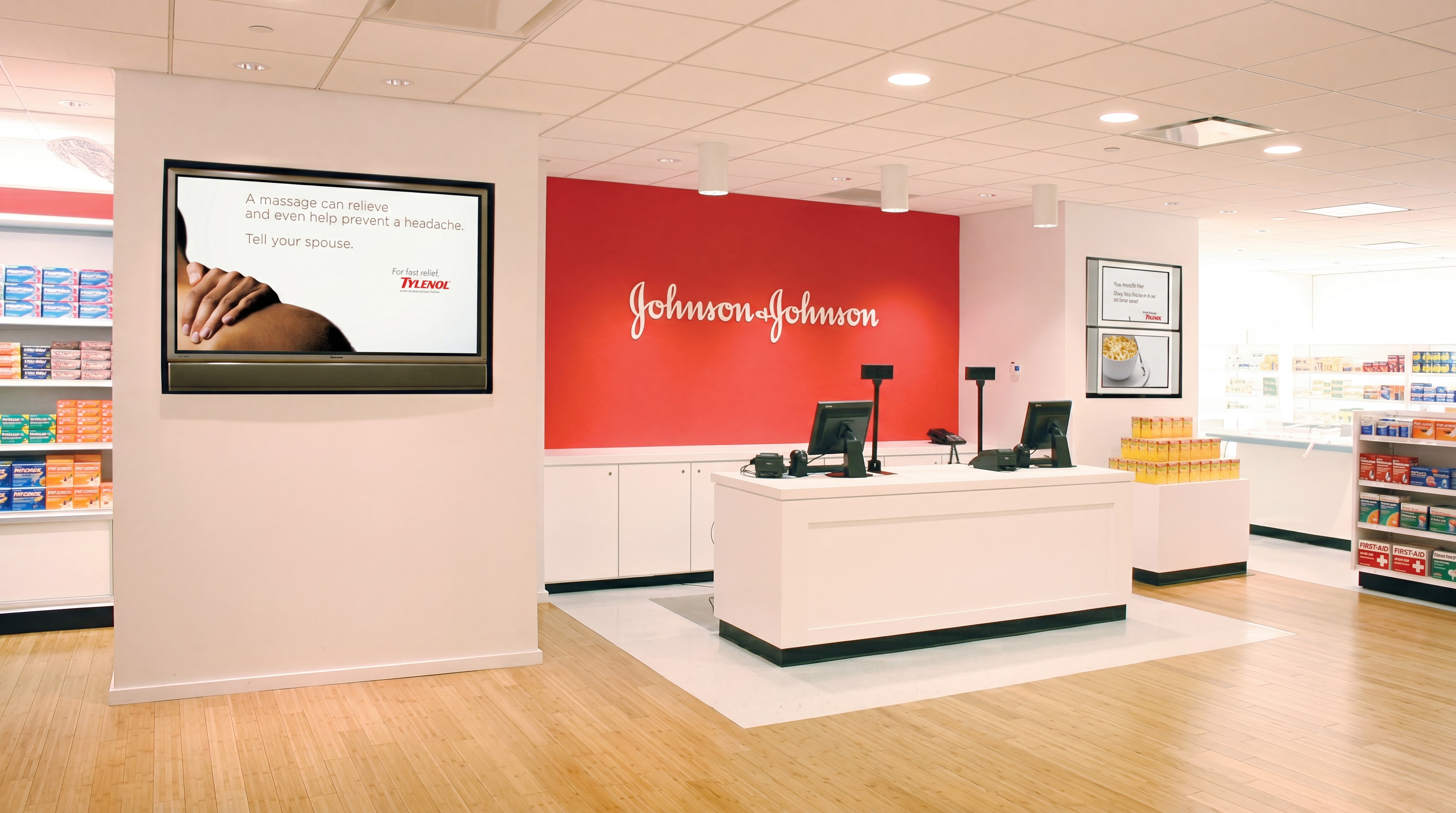
A store built to sell to other stores
RETAIL LAB STRATEGY
SHOPPER RESEARCH
B2B SHOWROOM
EXECUTIVE SUMMARY
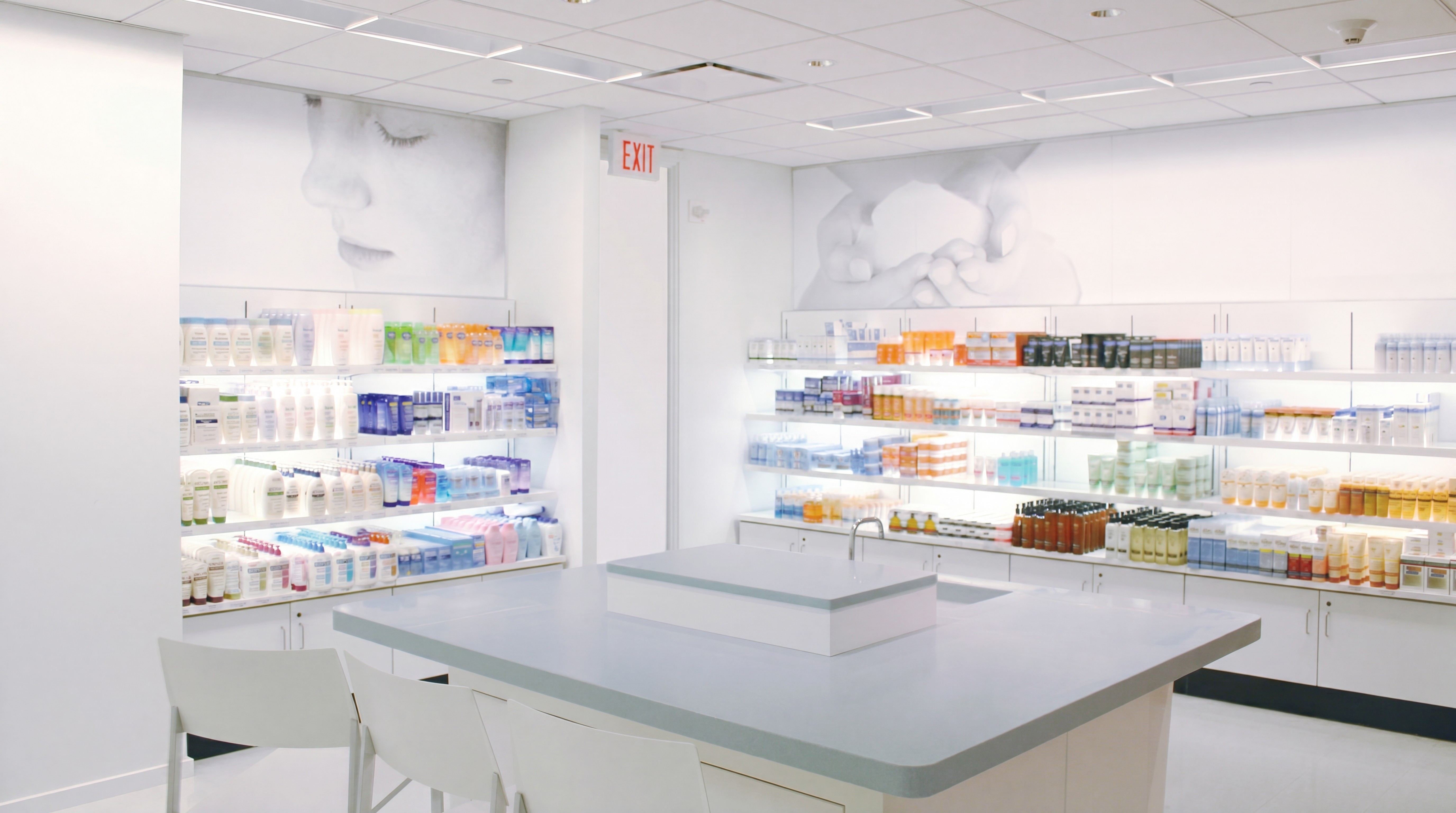
J&J’s leadership had a simple question about the employee store at their New Brunswick headquarters: could it do more than sell products to the people who work there? It could. We reconceived the store as a single environment built to do three jobs at once — a retail lab for testing merchandising concepts before they reach a national setting, a research space for observing how shoppers actually behave, and a B2B showroom where J&J could walk its own retail customers through what smarter merchandising does to their results. The space had to read as a genuine, first-class store while staying flexible enough to be rearranged and studied. The outcome is a store that returns more than retail margin — a place to prove what moves product, and to sell that proof to the people who run other stores.
A perk hiding a better question
The store sat inside J&J’s world headquarters, serving campus employees through the ordinary rhythm of a workday. But J&J is a company whose products live on other people’s shelves — drugstores, mass retailers, beauty aisles, by the millions. Its real estate isn’t its own store; it’s everyone else’s. The store the company actually owned was the one place it could control completely, and the one place it had never been asked to do any strategic work.
Three jobs, one room
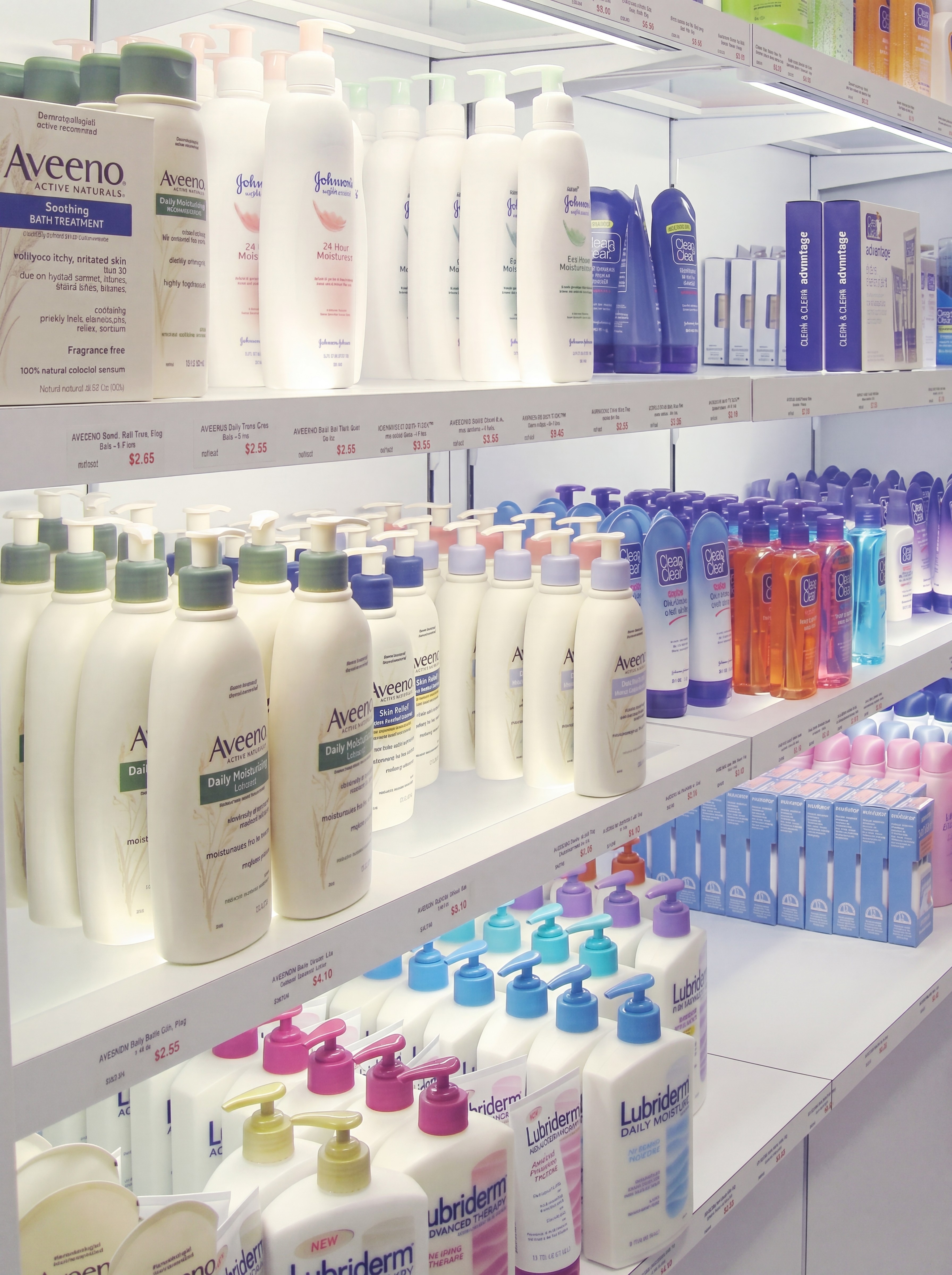
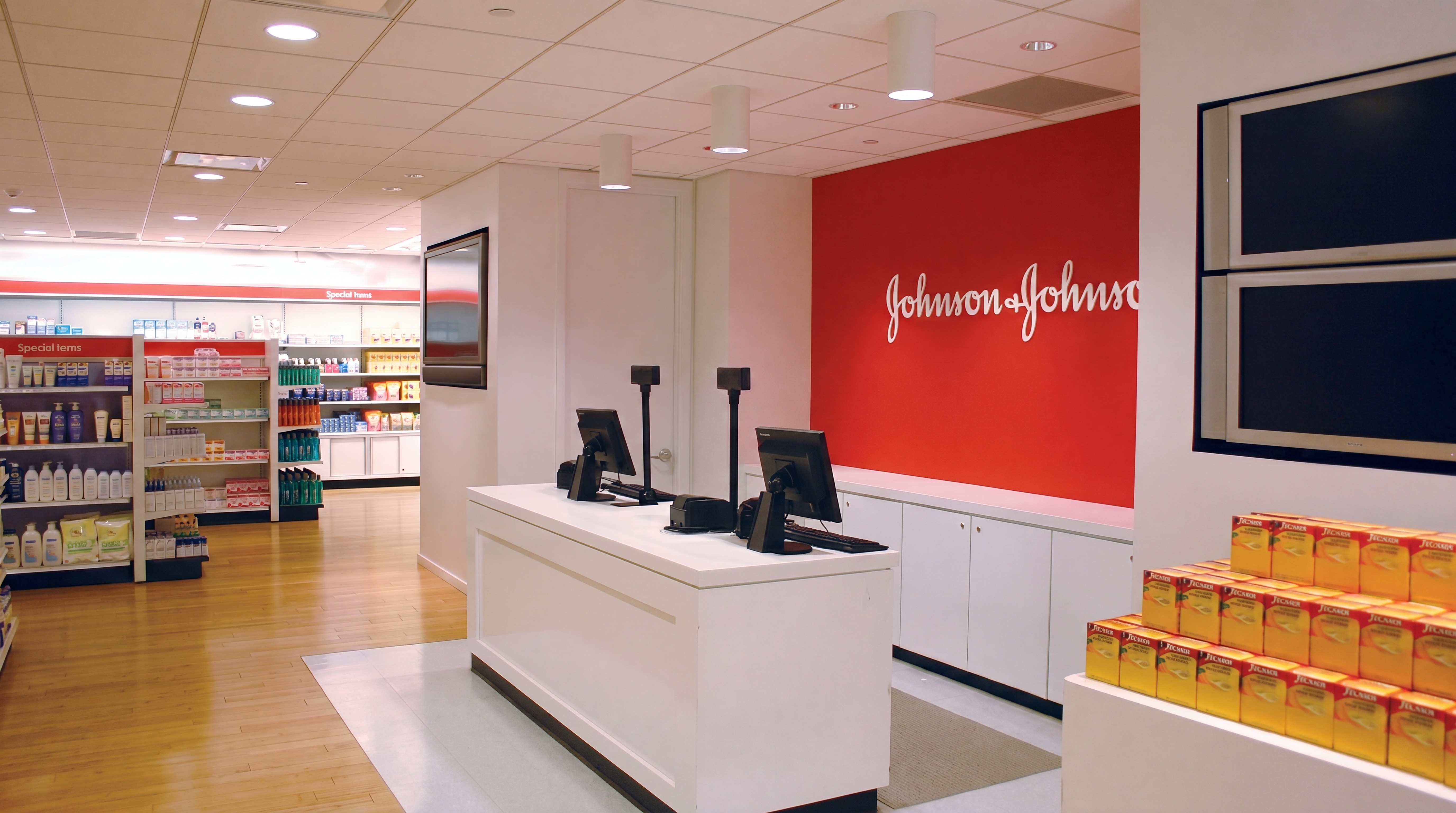
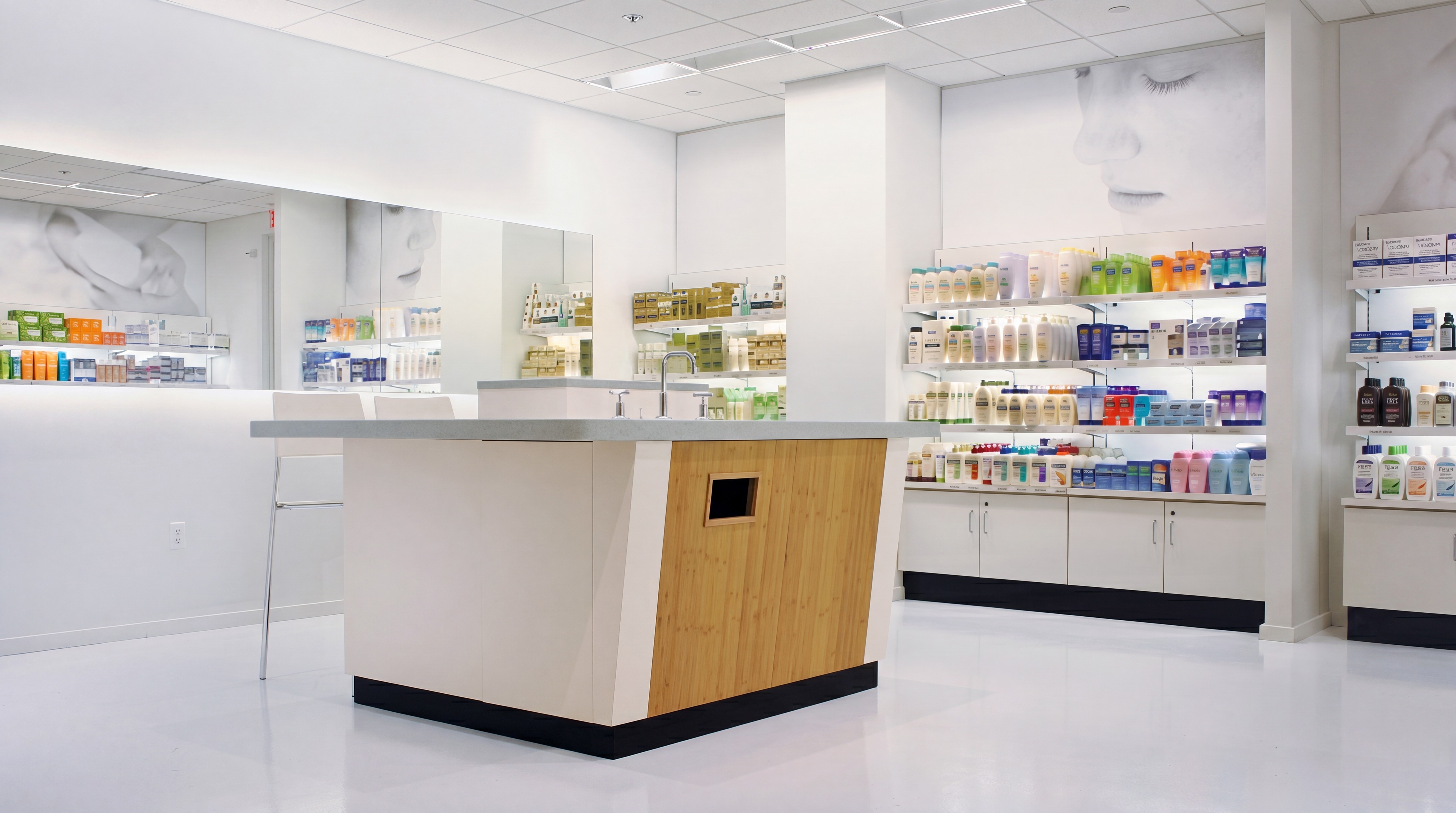
We reframed the store as a single instrument built to do three things at once. As a retail lab, it let J&J test merchandising and store-marketing concepts in a real, shoppable setting — configured one way, then another, to compare — before any of them reached a national rollout, trying ideas rather than guessing at them. As a research environment, it put the company in the room with real shopper behavior, with in-store focus groups and remote viewing built in. And as a B2B space, it gave J&J somewhere to bring its own retail customers and show them, first-hand, how a change to a shelf or an aisle moves their shoppers and their bottom line. That third job is the one that turns an interior into a strategy.

Selling to the people who sell
The most valuable of the store’s three jobs is the one that looks least like a store. J&J’s customers aren’t only the people who buy its products — they’re the retailers who decide how those products are stocked, shelved, and sold. Convincing a buyer to rethink an aisle usually means a deck and a promise. Here, it meant standing them inside a working environment and letting the shelves make the case. A reworked aisle is abstract on a slide and obvious in a room — and the store gave J&J’s teams a place to sell the thing hardest to prove on paper: what better merchandising feels like, and what it’s worth.
The store earns its keep three ways
Put together, the store returns more to J&J than retail margin. It proves merchandising ideas before the company commits to them, then carries the strongest outward to the retailers who stock its brands. It puts real shopper behavior within reach. And it gives the company’s sales teams a room to do their most persuasive work. One space, doing the job of a test kitchen, a research facility, and a showroom.
What a store can be made to do
J&J makes products that live on millions of shelves it doesn’t own. The one store it does own, it turned into something more useful than any of them — not a place to move product, but a place to prove what moves product. The work was never about the store. It was about understanding what a store could be made to do.
Next Project
