PREMIER
A Panama Flagship

Making trust tangible
FLAGSHIP DESIGN
RETAIL EXPERIENCE
BRAND ELEVATION
EXECUTIVE SUMMARY
Premier was a familiar value electronics brand, but it had no store of its own — its products reached people through other retailers, where it was hard to tell apart from anything else on the floor and cheaper imports were pressing on price. Rather than compete on price, we looked at what mattered more to its customers — trust and respect — and built Premier’s first store around that idea. The design carried it: a bold, high-end storefront that became a landmark in the mall, a clean and confident interior, and a series of experiential rooms that let people feel a product before buying it. The result looked and felt premium while the prices stayed low, which strengthened Premier’s standing across Panama and Central America and set it apart from value competitors that had no store of their own.


What mattered more than the price
Premier was a value electronics brand — phones, televisions, home and personal appliances at prices ordinary families could afford, but customers only met it in other retailers’ stores, judged mostly on spec and price. With cheaper imports pushing that price down, competing on cost alone was a losing position, so we looked at what else mattered to these shoppers. The research was clear: more than the lowest price, they wanted to be treated with trust and respect. That was a real opening, because in the Central American market the category did the opposite — most electronics stores there kept their best products locked behind glass, brought out only once a shopper showed real intent to buy. A store was the one place Premier could show respect rather than claim it. The question was how to design one that did.
Solution
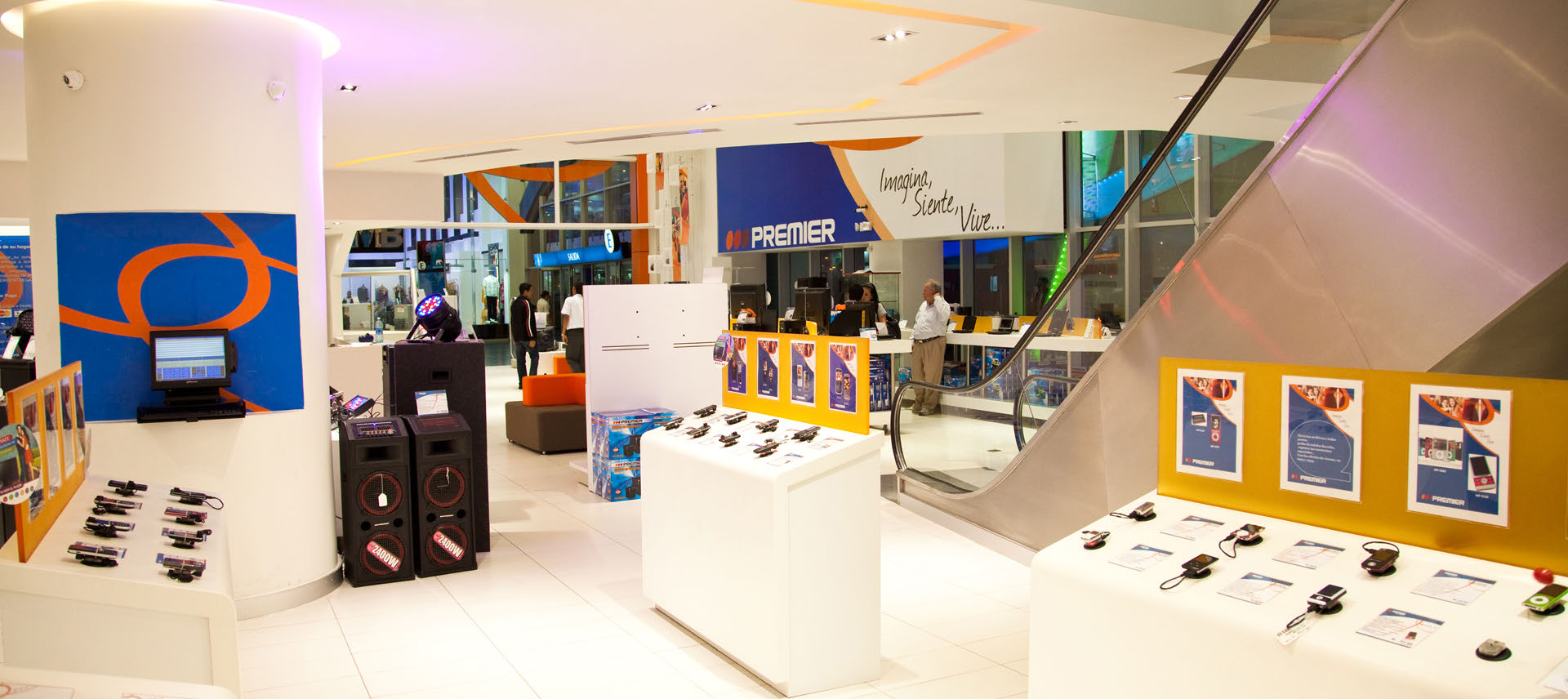
The argument started before anyone walked in. We gave Premier a bold, expressive storefront — sweeping curved gestures and a custom-shaped LED screen that read as proud, welcoming, and unmistakably high-tech. It looked like a flagship from several price tiers up, and that was deliberate: the way a brand presents itself can communicate quality and performance without a single price moving. The form was distinctive enough that it became one of the most recognizable storefronts in the mall — brand-building that worked on everyone who walked past, not only those who came in.
“It looked and felt premium while the prices stayed low — and that was the point.”
Inside, an experience the price didn’t predict
Inside, the store was designed to land as a genuine wow. The space was clean and confident — closer to the calm of the best technology retail than to a typical value electronics shop — with custom shelving and purpose-built displays that presented each product as something worth wanting. Engaging graphics carried the brand’s warmth through the space, and an in-store escalator, uncommon for a store of this kind in Panama, made the place feel less like a shop than a destination. Everywhere, the products were out in the open — powered on, within reach, and free to pick up and use.
Designing around how people actually shop
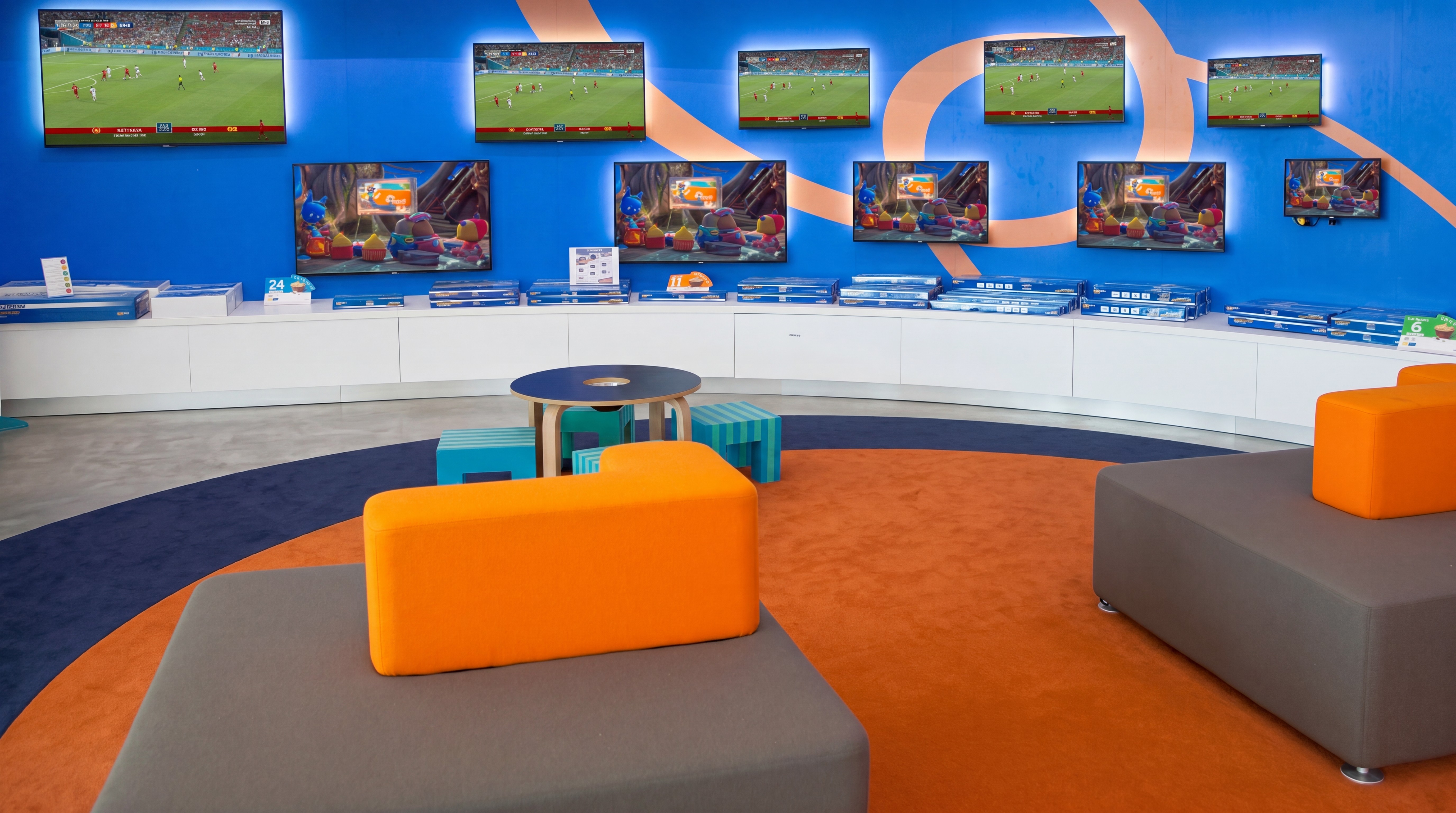
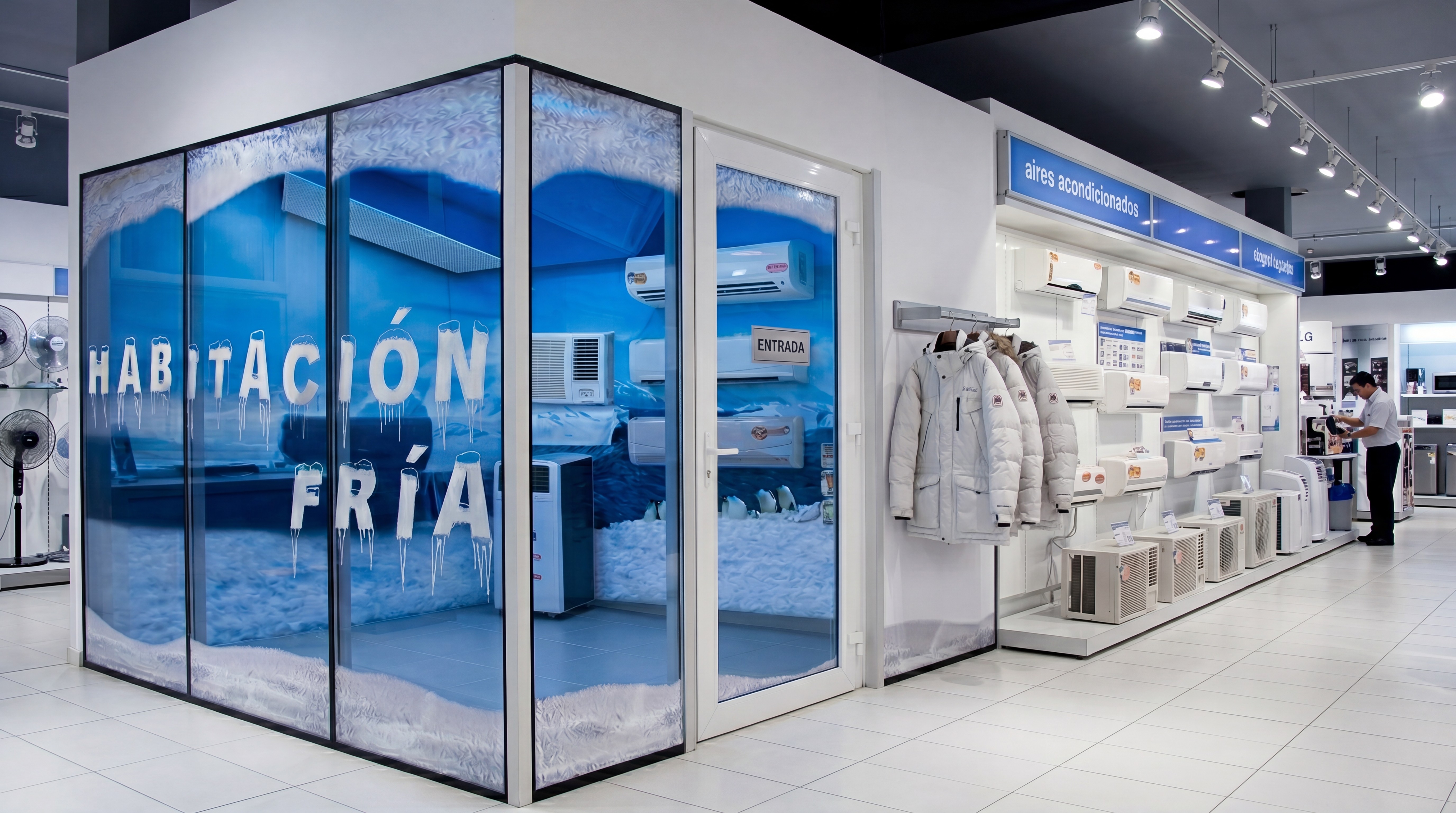
The heart of the store was a set of purpose-built environments, each one a small idea about respecting how people really buy. The “cold room” was the clearest: you can’t tell what a portable air conditioner does from a spec sheet, so we let people feel it — a genuinely chilled room you stepped into, coat and all, in an equatorial country where almost no one owns a coat. It turned a line on a box into a sensation. The “family room” came from watching how families actually shop together: an open lounge of comfortable sofas surrounded by the televisions on sale, each playing different content — cartoons, sports, telenovelas — so children could settle in while their parents took their time. A trip that might have ended the moment a child (or spouse) got restless could now stretch out, giving the products room to do their own selling. A beauty bar let people pick up and test personal appliances hands-on, and a test kitchen ran cooking demonstrations on the appliances for sale. Each space made the same case in a different register: that Premier trusted its customers to handle, try, and live with a product before deciding to buy it.
“We let people feel it — coat and all — in a country where almost no one owns one.”

What the store did for the brand
The store did well on its own terms — it wasn’t run at a loss to buy attention — but its larger value was what it did for the brand. Someone who had stepped into the cold room or spent time in the family room came away with a clearer, higher sense of Premier, and carried it back to wherever they next saw the brand for sale. That strengthened Premier’s position across Panama and Central America and set it apart from value competitors that had no store of their own. It also became the basis for the retail presence Premier went on to build across the country.
What a store can say that a price tag can’t
A value brand doesn’t have to settle for being one option among many, judged on price alone. A store gives it somewhere to make a fuller case — to look and feel like more than its price, treat people well, and be remembered for it. That impression travels back out to wherever the brand is sold. Premier’s flagship is a clear example of something that holds more broadly: a well-designed space, built on a real understanding of its customers, does more than sell product. It makes the brand harder to reduce to its price.
Next Project
