AT&T
The Global Network Operations Center
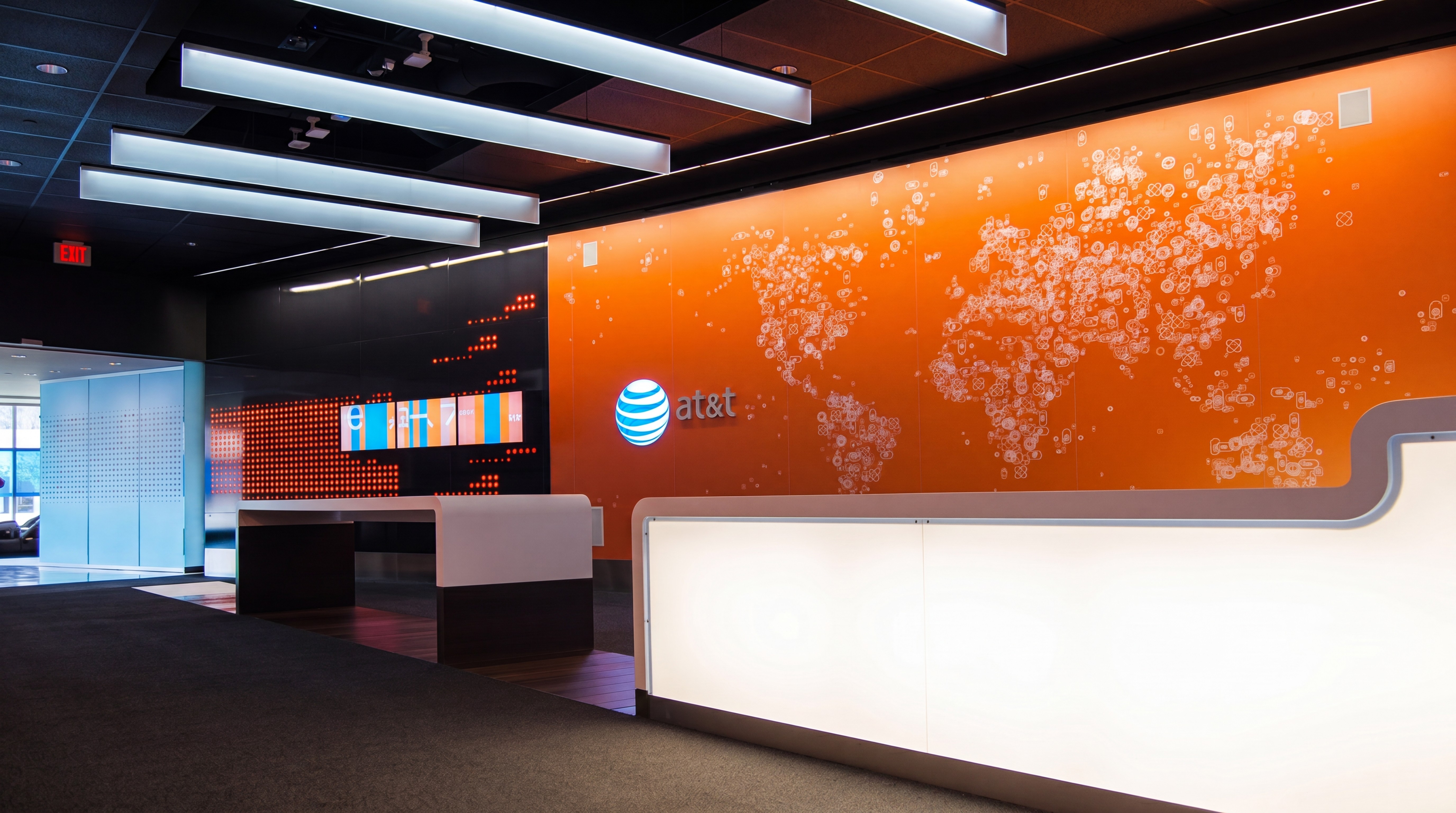
Demonstrating a more interactive future
SPatial storytelling
interactive media
b2B experience
EXECUTIVE SUMMARY
AT&T brings its most important clients to the Global Network Operations Center to understand who the company is — the senior executives who decide where their largest, most mission-critical contracts go, much of that business won or lost on the strength of the visit. The operations floor supplies the spectacle; the experience had to supply the meaning. We approached it as content first, building the story before the space: a journey across 25,000 square feet and three floors that carried a visitor through how the network actually works, the century of innovation behind it, the culture that keeps it advancing, and the future taking shape next. At its heart, a 120-foot interactive table — with a proprietary, multi-user app on the newly launched, AT&T-exclusive iPhone — let several visitors make connections together, the company’s whole proposition enacted in a single gesture. More than 400 of these high-level clients moved through the experience each year, and it was recognized in the Good Design Awards.
The value was invisible — so the story had to make it real
AT&T’s worth to a customer largely can’t be seen. It lives in undersea cables, in cellular masts, in software moving traffic across the globe in milliseconds. A space that merely described that value would always fall flat — and the stakes were commercial, not decorative, because these visits help close deals worth far more than the room that hosts them. So we started with the narrative — what a visitor should understand and the sequence of ideas that gets them there — and let the architecture take shape around it. The content was never a layer on the experience. It was the experience.
Four stories, one journey
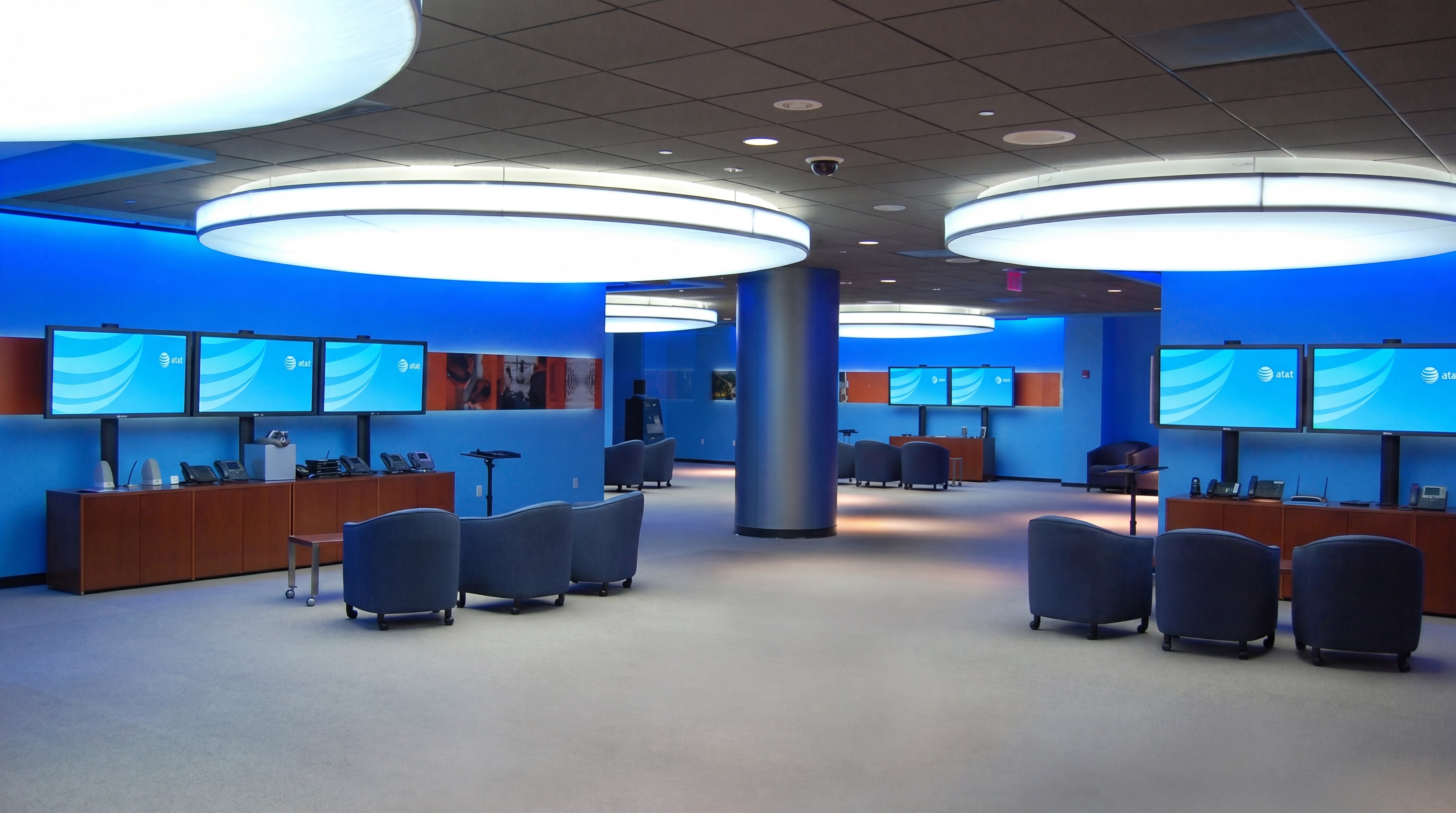
The journey carried a visitor through four territories. How the network works — interactive environments, including a series of multi-touch tables, where the science behind everyday communication became something you could explore with your hands. A history of innovation — a timeline gallery you walked through, marked by the years that mattered and the people behind them, establishing a company that has spent a century inventing what connects us. A culture of innovation — content that framed AT&T not as a utility but as an institution built for the future, the quiet argument that the next breakthrough is already coming. And the future itself — a multimedia museum designed so its content could change constantly, always pointed at what’s emerging next.


Where the story converged
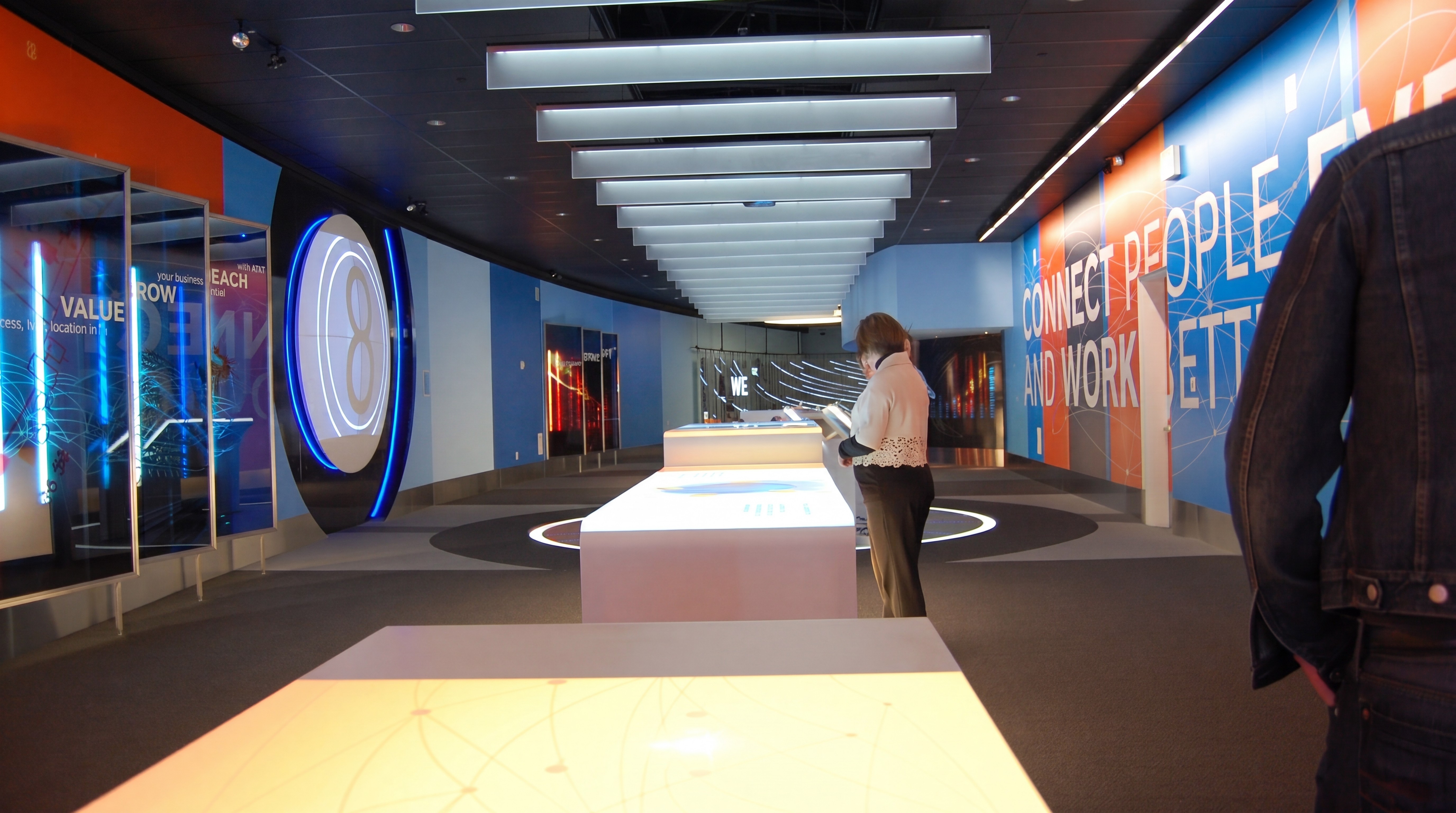
At the core of the museum was a 120-foot-long, fully interactive table, its content designed and built end to end. The highlight was a multi-user interface on the then-new, AT&T-exclusive iPhone. Our proprietary app let icons “jump” onto the table, combining into a collaborative soundscape and revealing AT&T’s newest products. Several people could play at once — separate signals resolving into something shared. It was the company’s entire proposition told in a single gesture: a network is greater than the sum of its parts, and here you could feel it happen.
What made it land
A visitor here didn’t watch a presentation about connection. They learned how the network works, where it came from, what kind of company keeps building it, and where it’s headed — and they learned it by moving through it, with their hands, beside other people, in rooms built to respond. That is the line between an exhibit and an experience: content you live instead of content you’re shown.
The environment is the argument
The project proved something that has only grown truer: the most persuasive thing a technology company can do is let people use the future, not just look at it — and you do that with content built to be lived. By writing the story first and shaping the space to carry it, we gave an invisible network a form a visitor could understand by touching, walking, and playing.
Next Project
